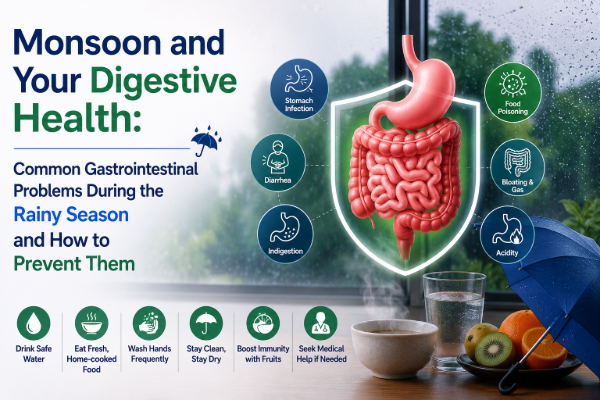
The arrival of the monsoon brings welcome relief from the scorching summer heat. While the cool weather and rainfall make the season enjoyable, it also creates the perfect environment for bacteria, viruses, and parasites to thrive. As a result, hospitals often witness a significant rise in patients suffering from digestive disorders during this time of the year.
Food contamination, unsafe drinking water, poor hygiene, and weakened immunity contribute to an increased risk of gastrointestinal infections. Although many digestive issues are mild and resolve with proper care, some can become severe and require hospitalization or surgical intervention if left untreated.
Understanding how the monsoon affects your digestive system can help you take preventive measures and protect your family’s health throughout the rainy season.
Why Do Digestive Problems Increase During the Monsoon?
Monsoon weather creates ideal conditions for harmful microorganisms to multiply rapidly. High humidity and moisture allow bacteria and fungi to contaminate food and water more easily than in other seasons.
Street food, improperly stored leftovers, contaminated vegetables, and unfiltered drinking water become major sources of infection. Additionally, reduced sunlight and fluctuating temperatures may weaken immunity, making the body more susceptible to gastrointestinal illnesses.
Children, elderly individuals, pregnant women, and people with diabetes or weakened immune systems are particularly vulnerable during this season.
Common Digestive Problems During the Monsoon
1. Food Poisoning
Food poisoning is one of the most common digestive illnesses during the rainy season. Consuming contaminated food or beverages allows bacteria, viruses, or toxins to enter the digestive tract.
Common Symptoms
- Sudden stomach pain
- Nausea
- Vomiting
- Loose stools
- Fever
- Weakness
- Dehydration
Most mild cases improve within a few days, but persistent vomiting, bloody stools, or severe dehydration require immediate medical attention.
2. Gastroenteritis (Stomach Flu)
Gastroenteritis is an infection of the stomach and intestines caused by viruses, bacteria, or parasites. It spreads rapidly through contaminated food, water, or close contact with infected individuals.
Symptoms Include
- Diarrhea
- Vomiting
- Abdominal cramps
- Fever
- Fatigue
- Loss of appetite
Prompt hydration is essential to prevent complications.
3. Typhoid Fever
Typhoid is a bacterial infection transmitted through contaminated food and drinking water. It becomes more common during the monsoon due to poor sanitation and water contamination.
Symptoms
- Persistent high fever
- Abdominal discomfort
- Headache
- Weakness
- Constipation or diarrhea
- Loss of appetite
Early diagnosis and antibiotic treatment are important to prevent complications.
4. Hepatitis A and E
These viral infections spread through contaminated food and water. They primarily affect the liver and are more frequently reported during the rainy season.
Warning Signs
- Yellowing of the skin and eyes (jaundice)
- Dark urine
- Fatigue
- Fever
- Nausea
- Abdominal pain
Maintaining proper hygiene and drinking clean water significantly reduces the risk.
5. Acid Reflux and Indigestion
People often consume fried snacks, spicy foods, and sugary beverages during the monsoon, which can worsen acidity and indigestion.
Symptoms may include:
- Burning sensation in the chest
- Bloating
- Burping
- Sour taste in the mouth
- Upper abdominal discomfort
Eating smaller meals and avoiding heavy foods can help reduce symptoms.
6. Gallbladder Problems
High-fat diets and unhealthy eating habits may trigger gallbladder attacks in people with existing gallstones.
Symptoms include:
- Severe pain in the upper right abdomen
- Pain after eating fatty meals
- Nausea
- Vomiting
- Fever if infection develops
Ignoring these symptoms may lead to complications requiring surgery.
7. Appendicitis
Although appendicitis can occur at any time of the year, delayed treatment during monsoon illnesses can sometimes make diagnosis difficult.
Symptoms
- Pain starting around the navel and moving to the lower right abdomen
- Fever
- Nausea
- Vomiting
- Loss of appetite
Appendicitis is a surgical emergency and should never be ignored.
How to Protect Your Digestive Health During the Monsoon
Simple preventive measures can significantly reduce your risk of gastrointestinal infections.
Drink Safe Water
Always drink boiled, filtered, or purified water. Avoid consuming water from unknown sources.
Eat Freshly Cooked Food
Freshly prepared meals are safer than food left at room temperature for several hours.
Avoid Street Food
Street food may be exposed to contaminated water, dust, and flies, increasing the risk of foodborne illnesses.
Wash Fruits and Vegetables Thoroughly
Clean produce under running water before consumption.
Maintain Hand Hygiene
Wash your hands with soap before eating, after using the restroom, and after returning home from outside.
Store Food Properly
Refrigerate leftovers immediately and reheat them thoroughly before eating.
Strengthen Your Immunity
Consume a balanced diet rich in fruits, vegetables, whole grains, and protein to support your immune system.
Foods to Eat During the Monsoon
Choose foods that are light, nutritious, and easy to digest.
Recommended foods include:
- Freshly cooked rice
- Dal
- Vegetable soups
- Khichdi
- Idli
- Steamed vegetables
- Fresh curd (if tolerated)
- Bananas
- Apples
- Coconut water
- Homemade buttermilk
Foods to Avoid
Limit or avoid:
- Street food
- Raw salads from outside
- Cut fruits sold in the open
- Oily and fried snacks
- Excessively spicy foods
- Unpasteurized dairy products
- Stale leftovers
Warning Signs That Require Immediate Medical Attention
Consult a gastro specialist immediately if you experience:
- Severe abdominal pain
- Persistent vomiting
- Bloody stools
- High fever
- Yellowing of the eyes or skin
- Severe dehydration
- Continuous diarrhea for more than two days
- Unexplained weight loss
Early diagnosis can prevent serious complications and improve recovery.
When is Surgery Required?
While many digestive illnesses improve with medications, certain conditions require surgical treatment.
These include:
- Acute appendicitis
- Gallstones with recurrent pain
- Intestinal obstruction
- Perforated ulcer
- Complicated hernia
- Certain gastrointestinal tumors
Modern laparoscopic surgery allows many procedures to be performed through small incisions, leading to less pain, faster recovery, and shorter hospital stays.
Tips for Families During the Rainy Season
- Encourage children to wash their hands frequently.
- Avoid drinking untreated water while traveling.
- Carry a water bottle from home.
- Avoid eating food that has been left uncovered.
- Keep your kitchen clean and dry.
- Do not ignore persistent digestive symptoms.
- Schedule regular health check-ups if you have diabetes or chronic digestive disorders.
Conclusion
The monsoon season brings freshness to nature, but it also increases the risk of digestive illnesses due to contaminated food and water. Most gastrointestinal infections can be prevented by following good hygiene practices, eating freshly prepared meals, staying hydrated, and seeking medical attention when symptoms persist.
If you experience severe abdominal pain, repeated vomiting, jaundice, or prolonged digestive problems, consult a qualified gastro surgeon without delay. Early diagnosis and timely treatment can prevent complications and help you recover faster.
Frequently Asked Questions (FAQs)
1. Why do stomach infections increase during the monsoon?
Warm, humid weather promotes the growth of bacteria, viruses, and parasites, increasing the risk of food and water contamination.
2. Is it safe to eat street food during the rainy season?
It’s best to avoid it, as contaminated food and water can increase the risk of food poisoning and gastrointestinal infections.
3. How can I prevent food poisoning during the monsoon?
Drink safe water, eat freshly cooked food, wash fruits and vegetables thoroughly, maintain hand hygiene, and avoid stale or uncovered food.
4. Which foods are best for digestion during the monsoon?
Light meals such as khichdi, soups, steamed vegetables, rice, dal, bananas, and homemade curd (if tolerated) are generally easier to digest.
5. When should I see a gastro surgeon?
Seek medical attention if you have severe abdominal pain, persistent vomiting, bloody stools, jaundice, unexplained weight loss, or symptoms that do not improve within a few days.
6. Can monsoon infections require surgery?
Yes. Conditions such as appendicitis, gallbladder disease, intestinal obstruction, and some gastrointestinal emergencies may require surgical treatment.